Table of contents
There’s a growing backlash against “checklist travel”, the kind that treats cities as backdrops for selfies and attractions as items to tick off before the next flight. In its place, a quieter shift is taking hold, pushed by overtourism debates and rising prices, and pulled by a simple realization: the most memorable moments often come from what locals actually do. The fastest route to a destination’s character is rarely the main boulevard, it’s the activity that reveals daily life.
Skip the landmarks, follow the routines
What do you remember years later: the cathedral façade you photographed with hundreds of others, or the small, unplanned encounter that made a place feel real? Researchers have long argued that “everyday culture” is what visitors struggle to access, and it’s also what destinations risk losing when tourism concentrates on a handful of hotspots. The dynamics are measurable: according to Euromonitor International, global international arrivals reached 1.3 billion in 2023, a powerful rebound that refocused attention on crowd management and on the distribution of visitor spending beyond core districts.
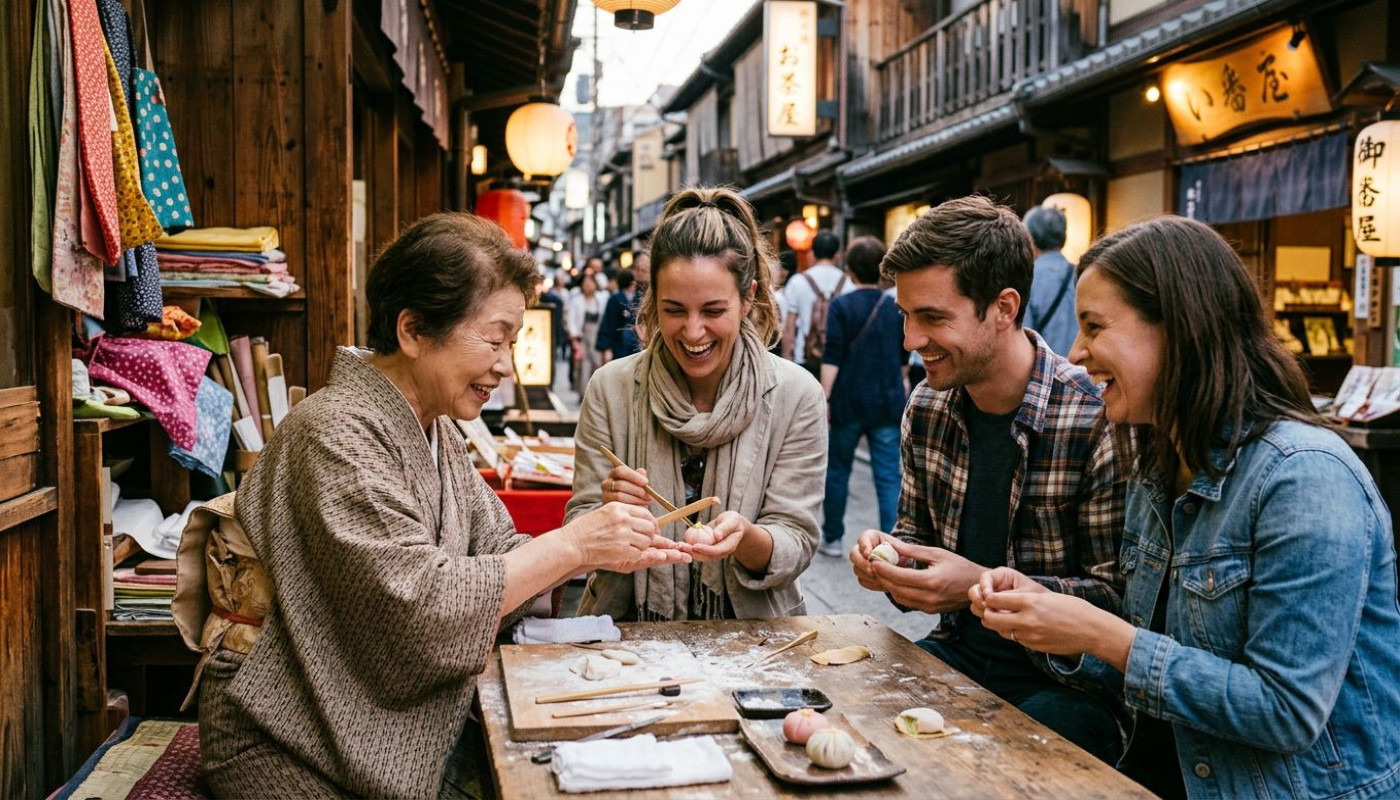
Local activities are one of the most direct tools for that redistribution, because they move people through neighborhoods at human scale, and they translate a city’s values into something you can do, not just admire. A walking tour built around a market, a sauna ritual, a neighborhood bakery crawl, a seasonal foraging trip; each pulls you toward the rhythms residents recognize. It is also where the “translation” problem begins, because the cues that make an activity meaningful to locals are often invisible to outsiders. If you do not know why a certain dish matters, why the lake is sacred in summer, why the queue forms at a specific kiosk, you can be present and still miss the point.
The best local-led experiences solve this without turning the city into a museum, they explain the “why” just enough, and then let the place speak through taste, movement, and conversation. That balance matters; travelers are increasingly skeptical of over-scripted performances, yet they still want context. Done well, local activities act like cultural subtitles: they keep the scene authentic, while making it legible to newcomers.
Spending that stays local changes everything
Overtourism is often framed as a question of numbers, but money flows can be just as decisive. When visitors concentrate their time and budgets in the same few areas, pressure rises on housing, transport, and public space, and the economic benefits can narrow to a small set of businesses. This is why destination managers increasingly talk about “value” rather than volume, and about how to lengthen stays, spread visits across seasons, and deepen engagement.
Local activities tend to distribute spending more widely, because they rely on micro-economies: independent guides, small cafés, craft studios, neighborhood venues, and transport routes that are not simply airport to center to museum. That can sound abstract, yet the logic is concrete: a cooking class buys ingredients from nearby suppliers, a kayak outing employs local instructors, a photography walk ends in a family-run coffee shop rather than a global chain. The same travel budget, redirected, can support more livelihoods, and reduce the feeling that tourism is something imposed rather than shared.
Data supports the broader economic premise that experiences are central to how people allocate leisure spending. MasterCard’s Economics Institute has repeatedly highlighted the post-pandemic shift toward services and experiences, and while individual destinations vary, the trend is consistent: travelers are willing to pay for activities that feel distinctive, personal, and rooted in place. That willingness creates an opening for cities to protect their identity, by prioritizing experiences that reward curiosity rather than consumption.
It also changes the social tone of a trip. When your day includes a local guide and a small group, the city stops being an anonymous stage, and becomes a conversation. You ask questions you would never ask a monument, and you receive answers shaped by lived reality, not by plaques. For visitors, it is more intimate. For residents, it can feel more respectful, especially when activities are designed with community input and clear rules around group size and behavior.
Stockholm’s best stories live off-center
Stockholm is often sold through its postcard angles: Gamla Stan’s cobbled lanes, the Vasa ship, the archipelago horizon. They are worth seeing, but they are also the easiest parts to misunderstand, because they can encourage a “beautiful but distant” relationship with the city. To grasp Stockholm’s temperament, you have to meet it where it relaxes, and where it negotiates its seasons, its light, and its relationship to water.
That usually means stepping away from the tight cluster of central highlights, and leaning into activities that reveal how Stockholmers actually inhabit their city. In summer, the water is not scenery, it is infrastructure and playground at once, shaping commutes, leisure, and social life. In winter, the city’s rituals become more interior, and the contrast between darkness and warmth starts to define daily choices, from sauna culture to the cadence of cafés. Even the much-discussed Swedish concept of lagom, often flattened into a slogan, is better understood through a few hours of doing, not reading.
The practical challenge is finding experiences that are not generic, and that can bridge the gap between visitor expectations and local reality. The difference is subtle but crucial: a “must-do” list replicates what everyone else is doing, while a local activity can show you what makes the same place distinctive. For Stockholm, that might be a neighborhood-focused walk that explains why certain districts feel like villages, or an archipelago outing that clarifies how nature access is structured, and why it is treated as a public good rather than a luxury.
For travelers who want that kind of entry point, https://www.stockholm-spirit.com/ is one of the gateways that puts local activities at the center of the experience, making it easier to move beyond the familiar highlights and into the city’s lived texture. The point is not to avoid the famous sites, it is to let them sit within a broader narrative, so Stockholm becomes a place you understand, not just a place you visited.
How to pick an activity that feels real
Authenticity is an overused word, so it helps to make it measurable in your own planning. Start with group size: smaller groups tend to allow real conversation, and reduce the feeling of being herded through a script. Then look at where the activity takes place. If every stop is within the same tourist corridor, you may learn facts but you are unlikely to see daily life. The best activities often include ordinary spaces, because ordinary spaces are where culture is practiced, not performed.
Next, examine the “translation” layer. A strong local experience does not drown you in trivia, yet it gives enough context to prevent misunderstanding. Ask yourself: will I learn why this matters to residents, or only what it looks like? Will I have time to taste, to watch, to ask, and to linger? Experiences that rush from point to point often mimic the pace of mass tourism, even when they are sold as boutique. Also consider seasonality. In Nordic destinations, the same city is effectively different places across the year; an activity designed for February should not be a diluted version of July, it should be rooted in what winter actually means.
Finally, pay attention to how an operator talks about responsibility. Do they mention respectful behavior in residential areas, or the limits of where groups should go? Do they acknowledge environmental constraints, especially in fragile natural settings like the archipelago? These are not marketing extras; they are signals that the activity is designed to coexist with local life. If tourism is going to remain welcome in crowded European cities, it will be because more travelers choose experiences that are lighter on the city, and heavier on understanding.
Before you book, set your trip up right
Plan ahead for peak dates, and reserve key activities early, especially in summer weekends and holiday periods when availability tightens. Build a realistic budget: guided local experiences can cost more than self-guided wandering, but they often replace several smaller, less meaningful expenses. Check city passes and public transport options, and look for any seasonal offers or visitor information programs that can reduce costs without sacrificing quality.
Similar

Adventure Within Reach: Surprising Activities Hiding In Overlooked Places

Exploring The Natural Wonders: Top 5 Hiking Trails Near Fréjus

Top 5 Interactive Exhibits At Marvel Avengers S.T.A.T.I.O.N. You Can't Miss
